
Janitorial Proposal Template for Commercial Cleaning Bids
Download a sample janitorial proposal template, preview the layout, and watch how to structure a commercial cleaning bid that looks professional and wins more contracts.
If you need a stronger starting point for office cleaning, facility bids, or commercial janitorial pricing, this page gives you the visual template, video walkthrough, and step-by-step structure in one place.
Janitorial Proposal Template Preview
If you’re a cleaning business owner trying to put together a more advanced proposal, this preview shows the level of structure and professionalism commercial clients expect. Instead of sending a basic price sheet, you can present a proposal that clearly communicates scope, pricing, systems, quality control, and overall credibility.
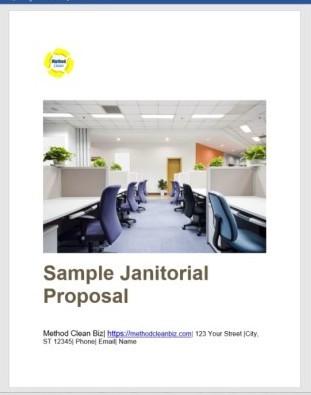
Use this as a starting point if you want your proposal to feel more complete, more polished, and more competitive for office cleaning and commercial janitorial accounts.
Watch: How to Structure a Janitorial Proposal
If you want to understand how the proposal should be built before you download it, start with this walkthrough.
What this page includes
- Sample janitorial proposal template preview
- Commercial cleaning bid video walkthrough
- Downloadable proposal template
- Step-by-step structure you can adapt to your business
Download the Janitorial Proposal Template
Need a faster way to build a professional commercial cleaning proposal? Download the template and customize it for your services, pricing, and scope of work.
Jump to the section you need
The 12 Most Important Sections in a Janitorial Proposal (Ranked by What Clients Actually Care About)
Not every section in a cleaning proposal carries the same weight. Commercial clients tend to focus on a few key areas when making a decision. This breakdown ranks each section based on real-world buying behavior across office, medical, industrial, and facility management accounts.
1. Pricing Page (Highest Impact)
This is where decisions are made. Clients want clarity, not just a number. A well-structured pricing page helps them understand what they are paying for and reduces hesitation.
Most important for: Property managers, industrial, commercial contracts
2. Services & Frequency
Buyers need to clearly see what is included. This section defines expectations and prevents misunderstandings after the contract starts.
Most important for: Offices, schools, healthcare facilities
3. Quality Control & Inspections
Clients want to know how you maintain standards over time. This section shows that your service is managed, not left to chance.
Most important for: Corporate, medical, long-term contracts
4. References & Testimonials
Social proof reduces risk. This is often what separates you from competitors with similar pricing.
Most important for: Corporate, education, medical buyers
5. Safety & Compliance
Critical in regulated environments. This reassures clients that your company understands protocols and liability.
Most important for: Medical, industrial, manufacturing
6. Cover Letter & Introduction
Sets the tone for the entire proposal. A strong introduction makes your bid feel tailored and professional.
Most important for: Corporate, office environments
7. Hiring & Training Process
Shows how you ensure reliability. This helps clients trust the people who will be in their building.
Most important for: Education, healthcare, corporate
8. Employee Standards
Reinforces professionalism and consistency. Buyers want to know how your team behaves on-site.
Most important for: Offices, medical facilities
9. Disinfecting & Detail Cleaning
Especially important post-pandemic. This section shows attention to health and sanitation standards.
Most important for: Medical, schools, offices
10. Equipment & Capabilities
Helps support your service claims. Shows that you have the tools to deliver consistent results.
Most important for: Industrial, large facilities
11. Training Checklist
Adds credibility but is usually secondary. Best used as supporting proof rather than a focal point.
12. Cover Page & Contact Info
Important for presentation, but least influential in decision-making compared to the sections above.
Why the Proposal Letter Matters More Than Most Cleaning Businesses Think
Most cleaning proposals go straight into scope, pricing, and service details. That covers the mechanics of the bid, but it often skips the one thing that helps a commercial client feel more confident moving forward — context.
A strong proposal letter gives your pricing and service pages a frame. It shows that you understand the prospect’s building, priorities, and expectations. It also helps your proposal feel less like a generic document and more like a professional recommendation built for their situation.
For a cleaning business owner, this matters because buyers are not just comparing numbers. They are also judging reliability, communication, and how easy your company feels to work with. A good cover letter lowers uncertainty before they ever get to the pricing page.
Watch: How to Write a Cleaning Proposal Letter
Key takeaway:
A proposal letter is not filler. It is the part of the proposal that establishes trust before the buyer evaluates your price.
Sample Cleaning Proposal Letter
Subject or Header: Proposal for Commercial Cleaning Services
Dear [Client Name],
Thank you for the opportunity to provide a proposal for your cleaning needs. After reviewing the scope of work and the priorities for your facility, we have prepared a service plan designed to support consistency, presentation, and day-to-day reliability.
Our goal is not only to keep your property clean, but to provide a system your team can depend on. In the proposal below, you’ll find our recommended service scope, schedule, pricing structure, and the standards we use to maintain quality over time.
We understand that choosing a cleaning provider is about more than price alone. It’s also about trust, communication, and confidence that the work will be done the right way. We appreciate the opportunity to show you how we approach that responsibility.
If you have any questions while reviewing the proposal, we would be happy to walk through it with you.
Sincerely,
[Your Name]
[Company Name]
[Phone Number]
[Email Address]
Want a deeper breakdown of how to structure this section? Read: How to Write a Cleaning Proposal Letter
How to Build a Janitorial Proposal That Wins Commercial Cleaning Contracts
A strong janitorial proposal does more than explain your services. It helps a prospect see your company as organized, credible, and ready to handle the account professionally. This step-by-step section shows the core pages that make a commercial cleaning proposal feel complete, persuasive, and easier for a buyer to approve.
If you are bidding office cleaning, facility maintenance, or recurring janitorial work, use the structure below as a guide for building a proposal that communicates scope, pricing, quality control, and trust. For more accurate numbers, use our Janitorial Bid Calculator before finalizing your pricing page.
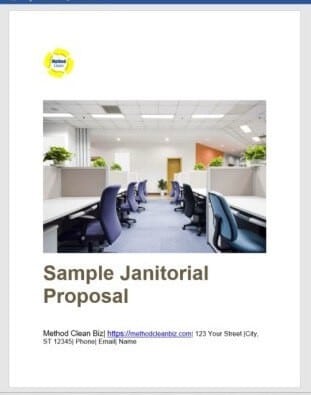
1. Cover Page & Contact Information: Start with a clean, professional cover page that clearly shows your company name, logo, and contact details. This is your first impression, and it should immediately make the proposal feel legitimate and well put together.
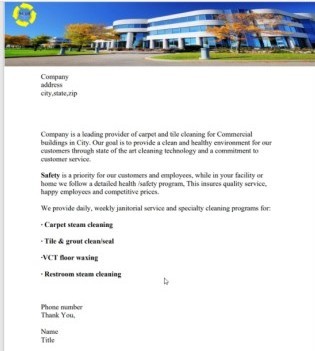
2. Cover Letter & Introduction: Use this section to frame the proposal, speak to the client’s priorities, and make the document feel specific to their building or account. A strong introduction helps the rest of the proposal feel more personal and less like a generic bid.
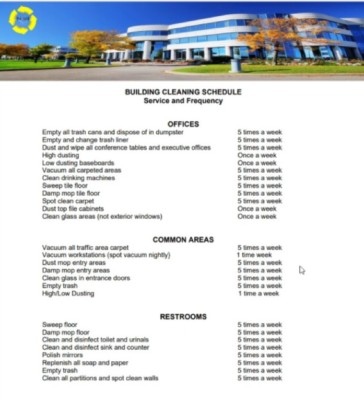
3. Services & Frequency: Show exactly what will be cleaned, how often service will happen, and how the work is organized. This section reduces confusion and helps the buyer picture what ongoing service will actually look like.
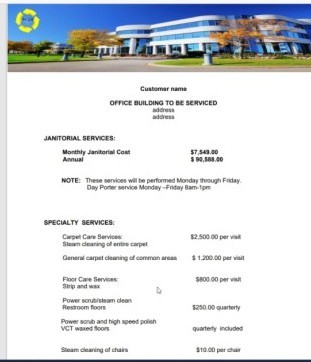
4. Pricing Page: Present your pricing clearly enough that the client understands what is included and why the number makes sense. A good pricing page lowers resistance by making the bid easier to evaluate and compare.
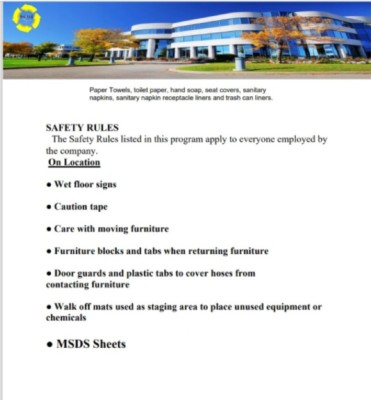
5. Safety Policies: Outline the standards you follow around PPE, safety procedures, and site conduct. This helps reassure commercial buyers that your company takes professionalism and risk management seriously.
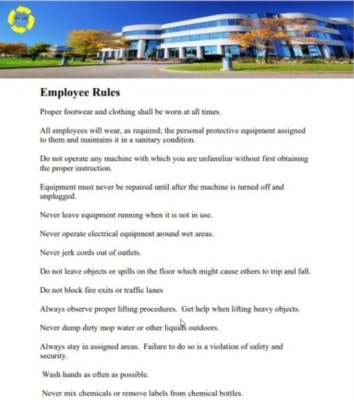
6. Employee Standards: Explain how your team is expected to present themselves, communicate, and perform on site. Buyers want to know who is entering their building and what level of consistency they can expect.
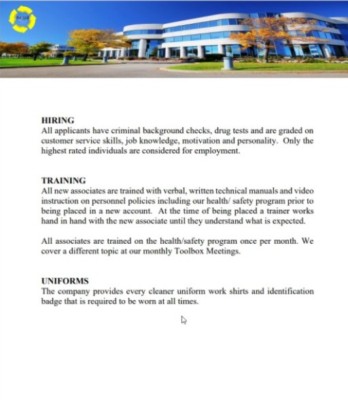
7. Hiring & Training Process: Show how you recruit, screen, and prepare staff before they are assigned to a commercial account. This strengthens trust by proving that quality is built into your process, not left to chance.
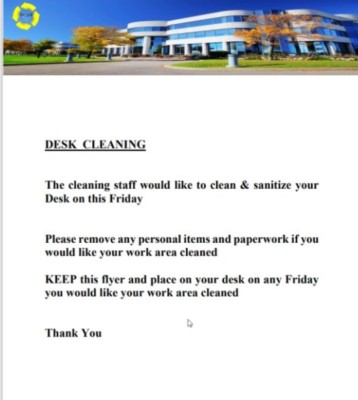
8. Disinfecting & Detail Cleaning: Use this section to explain how your team handles restrooms, touchpoints, shared workspaces, and other areas where detail and sanitation matter most. This is often a key trust-builder for decision-makers.
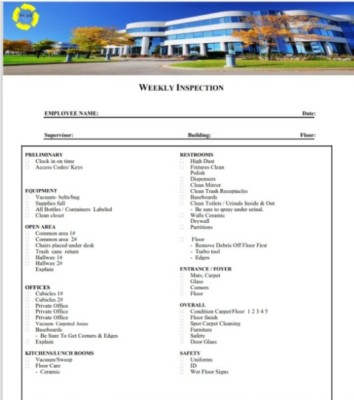
9. Quality Control & Inspections: Make it clear how you monitor the work after the contract starts. A proposal feels stronger when the client can see that your company has a real system for follow-up, accountability, and consistency.
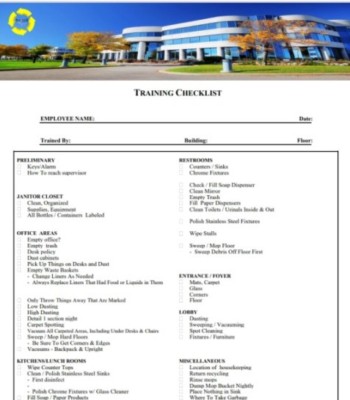
10. Training Checklist: Include a checklist or process that shows your team is trained before service begins. This adds credibility by showing that your standards are documented and repeatable.
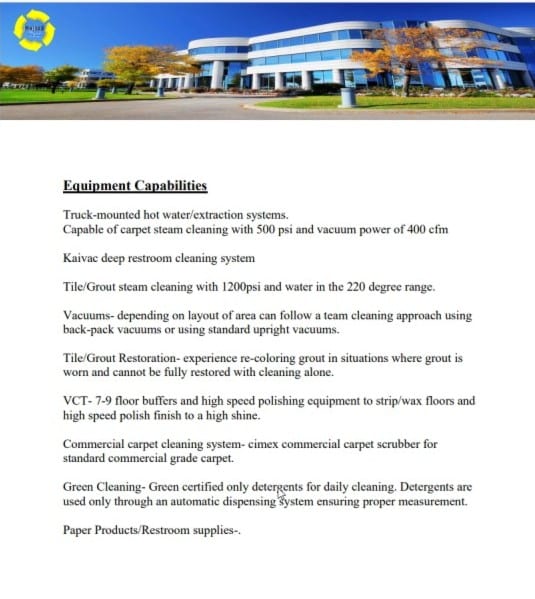
11. Equipment & Capabilities: Highlight the tools, systems, and equipment that support your service quality. This helps the buyer connect your operational capability with the results you are promising.
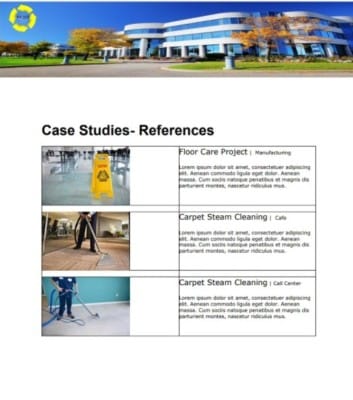
12. References & Testimonials: End with proof that other clients trust your company. Social proof helps reduce risk and gives the prospect more confidence that your team can deliver what the proposal promises.
FAQs About What Matters Most in a Janitorial Proposal
These are the questions cleaning business owners ask most often when deciding what to include, what to emphasize, and how to make a janitorial proposal more persuasive for commercial clients.
What is the most important part of a janitorial proposal?
What should be included in a commercial cleaning proposal?
Do clients care more about price or presentation in a cleaning proposal?
Why are references and testimonials important in a janitorial proposal?
What sections matter most for medical or industrial cleaning proposals?
How long should a janitorial proposal be?
What makes a cleaning proposal feel more professional?
Should every cleaning proposal include a cover letter?
Don’t Let Another Cleaning Proposal Cost You the Job
Most cleaning companies don’t lose bids because of price — they lose because their proposal doesn’t create enough clarity, trust, or confidence for the client to move forward.
You’ve already done the work. The difference is how you present it. Use a proven structure that helps your proposal feel organized, professional, and easy to approve.
Download one of our ready-to-use templates below and customize it for your next commercial cleaning bid.
Tools to Help You Win More Cleaning Contracts
A strong proposal is only one part of winning the job. Use these tools to improve your pricing accuracy, positioning, and overall bid strategy.
🧮 Janitorial Bid Calculator
Estimate cleaning job costs and build pricing that makes your proposal easier to approve.
🏗️ Construction Clean-Up Pricing Calculator
Build accurate estimates for specialty and post-construction cleaning projects.
📈 Cleaning Marketing Plan
Learn how to generate more commercial leads so your proposal pipeline stays full.

Share This With Your Team or Other Cleaning Business Owners
Most cleaning companies don’t lose contracts because of price — they lose because their proposal doesn’t build enough trust.
If this breakdown helped you rethink your proposal, share it with someone else in the industry or explore more examples below.
Want to post this on LinkedIn?
Most cleaning companies lose bids because of their proposal — not their price.
This breakdown shows which sections actually matter to commercial clients and how to structure a proposal that builds trust.
Worth a look if you're bidding janitorial or commercial cleaning work.